
 Jitterbit iPaaS
 Jitterbit API Manager
 Jitterbit App Builder
 Jitterbit EDI
 Marketplace
 Management Console
 Cloud Datastore
 Message Queue
 Jitterbit AI

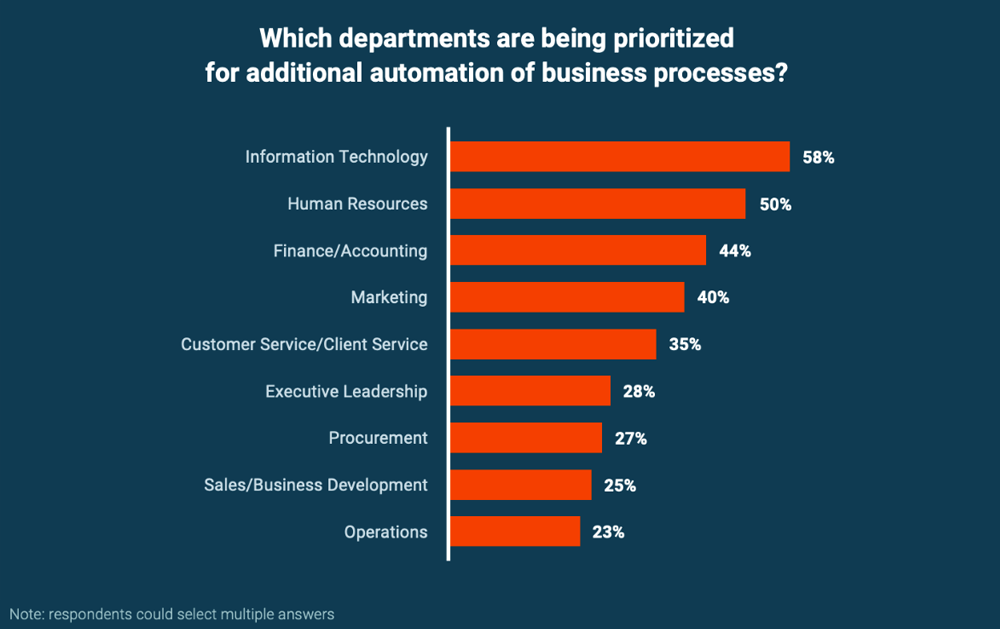
Is your HR department buried under admin work? You’re not alone: Human resources is one of the most commonly identified targets for business process automation, second only to IT.
From onboarding and compliance to performance tracking and payroll, HR is responsible for a wide range of time-sensitive, people-centered processes. When these workflows are slow, manual or disconnected, the impact is felt across the entire organization.
HR automation gives teams the tools to streamline repetitive tasks, reduce errors and focus on initiatives that improve employee engagement and retention. In this guide, we’ll explore what HR automation is, outline key processes to automate, and share best practices for building scalable, integrated workflows.
What is HR automation?
HR automation is the use of technology to manage repetitive, rule-based HR tasks without requiring constant human input.
Think of all the steps that go into hiring a new employee. You collect forms, send emails, assign equipment, notify IT, set up payroll and track training. Now imagine how much time could be saved if those steps happened automatically — in the right order, with the right data and without the need to double check every detail.
HR automation tools are powerful — particularly with AI technology becoming more advanced in recent years — but they don’t replace the human side of HR. Instead, they help free up time for more impactful tasks like building culture, supporting employees and driving long-term strategy.
Examples of HR Automation Tools
Popular HR automation software solutions include:
- ADP: Payroll, tax, and benefits automation
- Paylocity: Payroll automation
- Workday: Payroll and talent management automation
- SmartRecruiters: Recruiting and applicant tracking automation
- ServiceNow: Employee request, onboarding workflow and case management automation
A survey by Sapient Insights Group found that human resources teams use an average of 9 to 11 different HR applications to manage employee data. But the key to HR automation isn’t how many tools you use — it’s how well they work together.
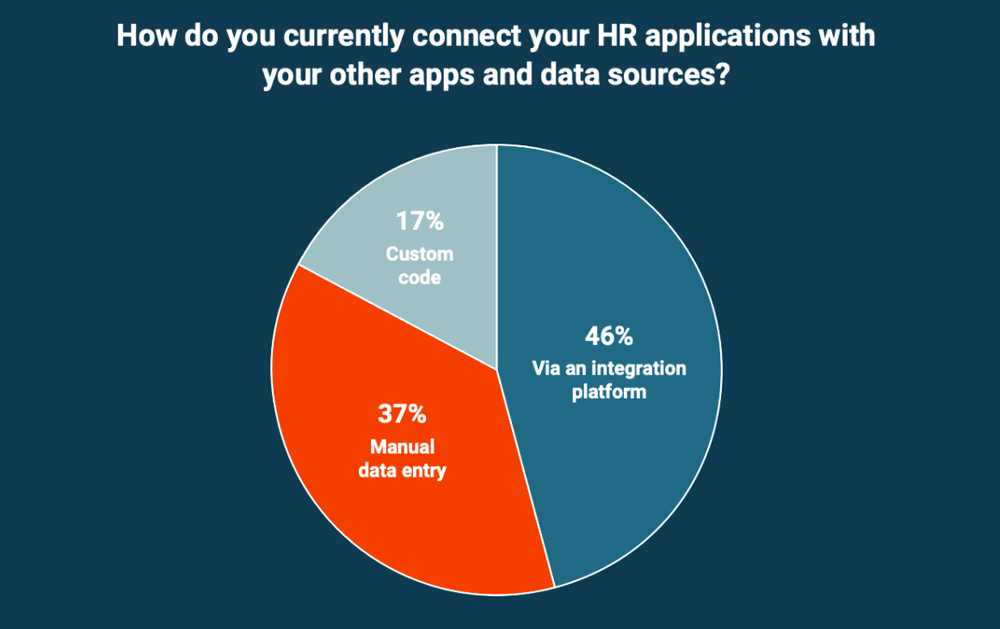
HR automation software works best when it’s fully integrated, not just with other HR tools, but also with broader operational systems like finance, project management and IT. That being said, 37% of HR respondents in our State of Automation survey said they were still using manual data entry to connect their departmental applications with other apps and data sources.
Jitterbit’s integration platform provides pre-built connectors for all of the HR applications above and more. Browse our full list of application connectors.
Benefits of HR Automation
When asked to identify which aspects of HR management they want to improve most, 38% of respondents in our State of Automation survey ranked increased productivity as their top priority, followed by increased employee retention, decreased HR management burden and increased morale.
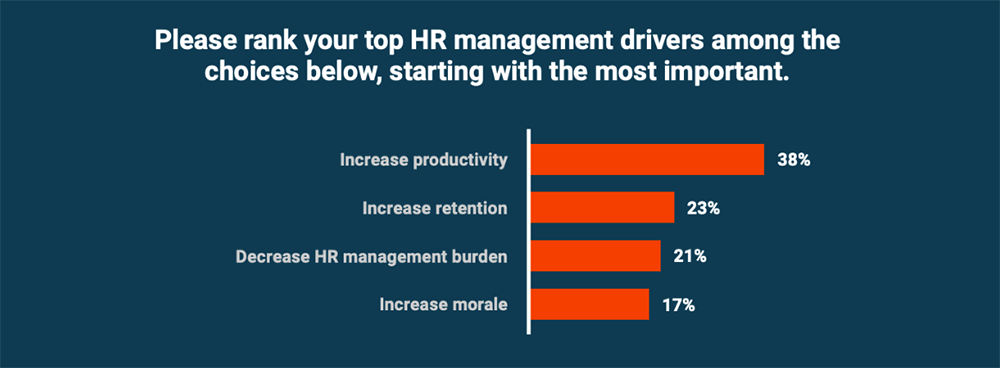
Here’s how automation can help address these key areas of focus:
Increase productivity
Routine tasks like data entry, document routing and approval workflows can eat up hours every week. Automation gives that time back to your team: Instead of tracking down paperwork or chasing status updates, you can focus on strategy, development and engagement.
Increase retention
First impressions matter. By connecting onboarding tasks across systems, HR automation prevents critical steps from falling through the cracks and helps new hires feel supported from Day One.
Decrease HR management burden
Mistakes in payroll, benefits or compliance can create headaches for both HR and employees. Automating data transfer between systems reduces manual entry, eliminates versioning issues, and helps ensure information stays accurate and up to date. It also simplifies compliance by tracking activity and maintaining proper documentation.
Increase morale
When employees receive prompt communication and timely support, it builds trust and improves morale. Automation helps employees get what they need faster — from reimbursements to performance feedback.
Common HR Automation Implementation Challenges
HR automation has clear benefits, but that doesn’t mean adoption is always easy. Like any operational change, there can be hurdles along the way. Here are three common challenges HR teams face when implementing automation, along with strategies to overcome them.
Time and effort to get started
 Challenge
Building automated workflows takes upfront time, especially if your systems aren’t well connected. HR teams already stretched thin might not feel they have the bandwidth to map every process and configure automation from scratch.
 Solution
Choose a platform that simplifies integration. Jitterbit Harmony with AI and low-code makes it easier to connect your existing tools and build reusable workflows that evolve with your needs — so you don’t have to reinvent the wheel every time something changes.
Employee and stakeholder buy-in
Challenge
Automation can sometimes raise concerns among employees who fear reduced human interaction or confusion about new processes. IT or leadership may also be hesitant if they’ve seen past tech rollouts fall flat.
Solution
Focus your messaging on how automation improves the employee experience. Faster onboarding, quicker reimbursements and fewer delays all contribute to a more supportive workplace. Bringing stakeholders in early and demonstrating quick wins can build momentum and trust.
Fragmented HR systems
Challenge
If your HR tech stack includes multiple tools that don’t speak to each other, automating even basic workflows can get complicated fast. Data silos make it harder to ensure consistency and reduce manual handoffs.
Solution
An enterprise automation platform like Jitterbit Harmony connects common HR systems like Workday, Gusto, ADP and Microsoft Teams with each other and with other core business systems. This creates a single source of truth for employee data — no more duplicate entries or misaligned records.
10 Use Cases for HR Automation
Manual tasks slow down HR teams and introduce unnecessary risk. The good news? Many of those tasks follow repeatable patterns that are perfect for automation.
Here are ten high-impact processes you can automate for faster, more efficient operations.
1. Employee onboarding
From signed offer to Day 1, onboarding involves coordination across HR, IT, payroll and management. Automating this process ensures nothing gets missed: contracts are sent, training is assigned and system access is provisioned on time. A smooth onboarding experience sets the tone for long-term retention.
2. Offboarding
Offboarding is just as critical as onboarding, especially when it comes to security and compliance. With automation, you can revoke access to tools, notify stakeholders, issue final paychecks and generate exit surveys — all with minimal manual effort.
3. Payroll processing
Payroll mistakes are costly and damaging to employee trust. By connecting time-tracking tools, HRIS systems and payroll platforms, you can eliminate double entry, reduce delays and ensure pay is always accurate and on time.
4. Benefits enrollment
New hires often feel overwhelmed by benefits options and deadlines. Automated workflows can guide them through the selection process, send reminders before deadlines and push finalized elections to your benefits provider without errors or back-and-forth emails.
5. Time-off requests
Manually routing PTO requests slows things down and creates bottlenecks. Automation allows employees to submit requests digitally, routes them to the appropriate approver, and updates calendars and payroll systems in real time.
6. Performance reviews
Annual or quarterly reviews often require coordination across managers, peers and systems. Automation helps schedule review cycles, gather 360-degree feedback and store the results in one central location — making it easier to track performance and growth over time.
7. Expense reimbursements
No one wants to wait weeks to be reimbursed. With automation, employees can submit expenses, route them for approval and trigger payments automatically. You can also sync expense data with accounting tools to avoid manual reconciliation.
8. Compliance training
Regulatory and company-specific training is critical, but easy to overlook. Automate enrollments for new hires, track completion status and send follow-up reminders so your team stays in compliance without micromanagement.
9. Job posting and applicant tracking
Posting open roles to multiple job boards and tracking candidates across systems is time-consuming. Automation can push listings to multiple platforms and pull applications directly into your ATS or HR platform, saving hours each week.
10. Employee data updates
Changes in job title, compensation or location need to be reflected across multiple systems. Automating these updates ensures consistency and helps maintain data integrity across payroll, benefits, compliance and org charts.
Real-World Case Study: HR Automation with Low-Code
It’s one thing to talk about automating HR processes. It’s another to see it work at scale. Aktif Bank, one of Turkey’s leading financial institutions, needed a smarter way to manage employee performance. Their HR and IT teams were struggling with disconnected systems, manual tracking and limited visibility across departments.
Using Jitterbit’s low-code application development platform, the company built a custom 360-degree performance management solution that unified data, streamlined workflows and improved transparency across the organization, resulting in:
- 30% reduction in the time needed for evaluations
- 20% boost in overall productivity and revenue
- Up to 10 hours saved each week
- 15% increase in employee satisfaction scores
- 10% increase in employee retention
Read the full case study to learn how Aktif Bank was able to achieve these results by automating its HR workflows with low-code.
Streamline HR Processes with Jitterbit’s Automation Platform
We don’t believe in one-size-fits-all automation. Every HR team has its own tools, workflows and challenges. Our job is to help you simplify what’s complicated.
With Jitterbit’s AI-infused automation and integration platform, businesses can:
- Connect the systems they already use
- Build secure, scalable workflows across teams
- Automate repetitive manual tasks
- Avoid custom development or starting from scratch